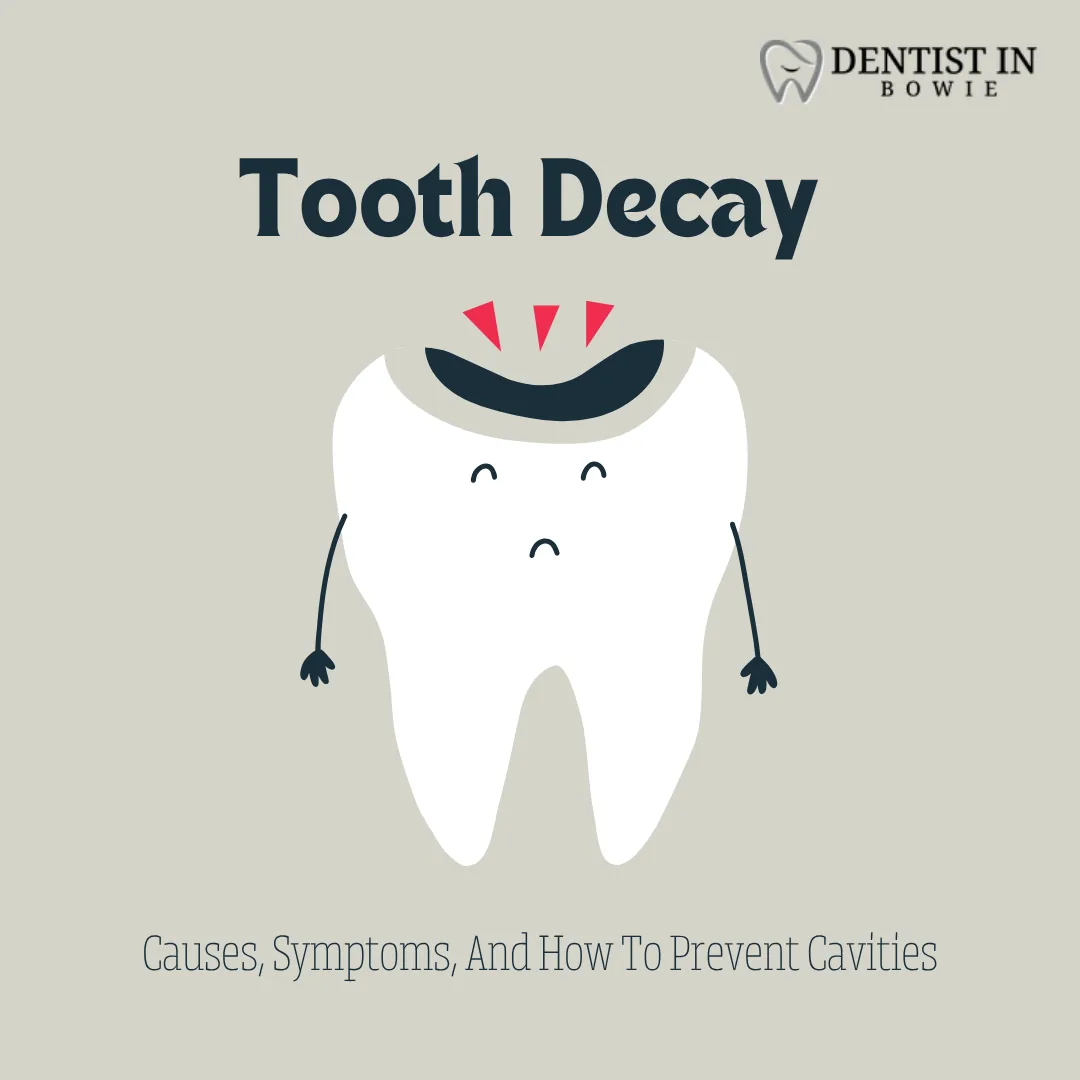
Many people feel a sharp pain or see dark spots on a tooth. They want clear help for tooth decay and cavities.
Plaque, a sticky film of bacteria, causes most cavities. Here you will know the causes, common symptoms, simple ways to prevent cavities, brushing, flossing, fluoride, sealants, and dental visits.
Bacteria in the mouth produce acids that attack tooth enamel. Plaque buildup increases the risk of decay and cavities.
Plaque builds on teeth when people skip proper brushing and flossing. This sticky film lets Streptococcus mutans and other bacteria produce acids that eat away enamel. Every time someone eats or drinks, they feed those bacteria and raise acid levels.
A dentist who treated 1,200 patients over 10 years saw many cavities form from poor oral hygiene, often leading to dental fillings or root canal care and frequent toothache. Failing to clean teeth well makes cavities more likely. Plaque buildup ranks as a primary cause of decay and gum disease.
Sugary snacks and starchy foods can seriously harm dental health. They feed bacteria in the mouth. These bacteria produce acids that attack teeth, leading to decay. Every time someone eats or drinks something sugary, they provide fuel for these harmful bacteria. This constant feeding increases the production of acids and raises the risk of cavities.
People often underestimate how much sugar is hidden in their favorite snacks or drinks. Even seemingly harmless items like bread or chips can contribute to cavity formation when left on teeth for too long.
Research shows that frequent snacking throughout the day significantly boosts the chances of developing cavities. Good oral hygiene practices are vital, but reducing sugary and starchy foods plays a huge role in preventing tooth decay as well.
Cavities form when bacteria attack the enamel of teeth. These holes or areas of decay develop due to plaque buildup, which is a sticky film of bacteria. Poor oral hygiene contributes greatly to cavity formation.
Lack of proper cleaning allows food particles, especially sugary and starchy snacks, to remain on teeth. This situation feeds the bacteria in the mouth and leads to acid production.
Frequent snacking increases the chance of developing cavities, as acids produced by bacteria continuously attack tooth enamel after eating. Bacteria like Streptococcus mutans can even spread between people, making cavities somewhat contagious.
To combat this issue, individuals should maintain good oral hygiene practices and limit their consumption of sweets and drinks high in sugar. Regular dental visits for cleanings also play an essential role in preventing decay and protecting dental health.
Tooth decay often shows clear signs. People may notice sensitivity when they eat hot, cold, or sweet foods. They might also see visible holes or dark spots on their teeth. Pain during chewing can indicate a deeper problem as well.
Tooth sensitivity to hot, cold, or sweet foods can indicate tooth decay. This discomfort often arises when enamel weakens due to plaque buildup. Plaque forms when bacteria interact with sugars from food and drinks, creating acids that attack the teeth. A person might feel sharp pain while eating ice cream or sipping hot coffee.
People at risk for cavities might notice this sensitivity more frequently. Often, they consume lots of sugary snacks and drinks throughout the day. Poor oral hygiene habits further contribute to this problem by allowing bacteria to thrive on their teeth. If someone experiences ongoing discomfort, it may signal deeper dental issues that require attention from a dentist.
Visible holes and discoloration on teeth signal tooth decay. These signs often indicate that bacteria have damaged the enamel. Plaque buildup plays a major role in this process. It forms when food particles mix with saliva and bacteria in the mouth. Sugary foods feed the bacteria, causing them to produce acids that attack enamel. This can lead to cavities forming over time.
Individuals may notice brown or black spots where decay has taken hold. Sensitivity can occur if these spots grow larger, making it painful to eat or drink hot or cold items. A dentist can identify these issues during routine check-ups, helping patients take necessary steps before problems worsen.
Regular dental visits play an essential role in maintaining dental health and catching decay early on, leading into prevention strategies for cavities next.
Visible holes or discoloration on teeth can signal more severe problems. Pain while chewing frequently occurs due to cavities. As bacteria attack the enamel, they create decay that leads to toothaches during meals. This discomfort often grows worse with each bite of food.
Sugary snacks and drinks heighten this issue since they increase the acid production in the mouth. Poor oral hygiene plays a major role too; failing to brush properly allows plaque to build up and cause further damage.
Regular dental visits help in identifying issues before they lead to significant pain while chewing or other complications.
To prevent cavities, people should brush and floss their teeth at least twice a day using fluoride toothpaste. Regular visits to the dentist help keep dental health in check. They can spot problems early before they worsen.
Cutting back on sugary snacks and drinks reduces the risk of decay. Staying informed about cavity prevention keeps smiles bright and healthy.
Brushing and flossing regularly with fluoride toothpaste helps keep teeth healthy. Fluoride strengthens enamel, making it more resistant to decay caused by plaque. Plaque forms when bacteria combine with food particles, resulting in cavities. Neglecting oral hygiene allows bacteria to thrive, leading to tooth decay.
Daily brushing helps remove food debris that feeds cavity-causing bacteria. Flossing cleans areas between the teeth where toothbrushes cannot reach. Individuals who stick to these practices reduce their risk of developing cavities significantly.
Good habits can save them from painful toothaches and costly dental fillings later on. Regular visits to the dentist further support these efforts for better dental health.
Limiting sugary snacks and drinks plays a crucial role in preventing cavities. Foods that contain high amounts of sugar feed bacteria in the mouth, leading to acid production. These acids attack tooth enamel, increasing the risk of decay.
Frequent snacking throughout the day raises this risk even further. Each time someone eats or drinks something sugary, they contribute to cavity formation. Many people underestimate how quickly plaque can build up from these habits. Bacteria like Streptococcus mutans are contagious; they can be transferred through sharing utensils or kissing.
This makes it essential for everyone to control their sugar intake and practice good oral hygiene consistently. Regularly eating nutritious snacks instead helps maintain dental health by protecting against cavities and strengthening enamel.
Good oral hygiene practices complement a low-sugar diet well; brushing teeth with fluoride toothpaste and flossing are equally important steps for keeping cavities at bay. Following these steps ensures better dental health while preventing any potential pain from issues like toothache later on.
After minimizing sugary snacks and drinks, the next step involves visiting the dentist for routine cleanings and check-ups. Regular dental visits play a crucial role in maintaining good oral hygiene. Dentists help remove plaque that builds up over time. This buildup contributes to cavities and tooth decay.
During check-ups, dentists can spot issues early before they become serious problems. They often use fluoride treatments to strengthen enamel against bacteria attacks. Routine cleaning keeps teeth healthy and reduces the risk of cavities significantly.
Many people find that their overall dental health improves with consistent professional care; it also makes them less likely to need dental fillings or root canals later on.
Tooth decay is caused by bacteria in the mouth that produce acid. This acid attacks the enamel, leading to cavities. Poor oral hygiene and a diet high in sugar also contribute to this problem.
Symptoms of tooth decay include toothache, sensitivity to hot or cold foods, and visible holes in teeth. Discoloration may also appear on affected teeth.
You can prevent cavities by brushing your teeth twice a day with fluoride toothpaste. Flossing daily helps remove food particles between teeth, and regular dental check-ups are important too.
Yes, diet plays a big role in tooth decay risk. Eating sugary foods and drinks increases acid production from bacteria; therefore, it is best to limit these items for better oral health.
Tell us a little about what you need — we'll be in touch shortly.
14999 Health Center Dr #110, Bowie, MD 20716, United States
Hi! I'm Tooth fairy! Your AI Assistant Ask me anything