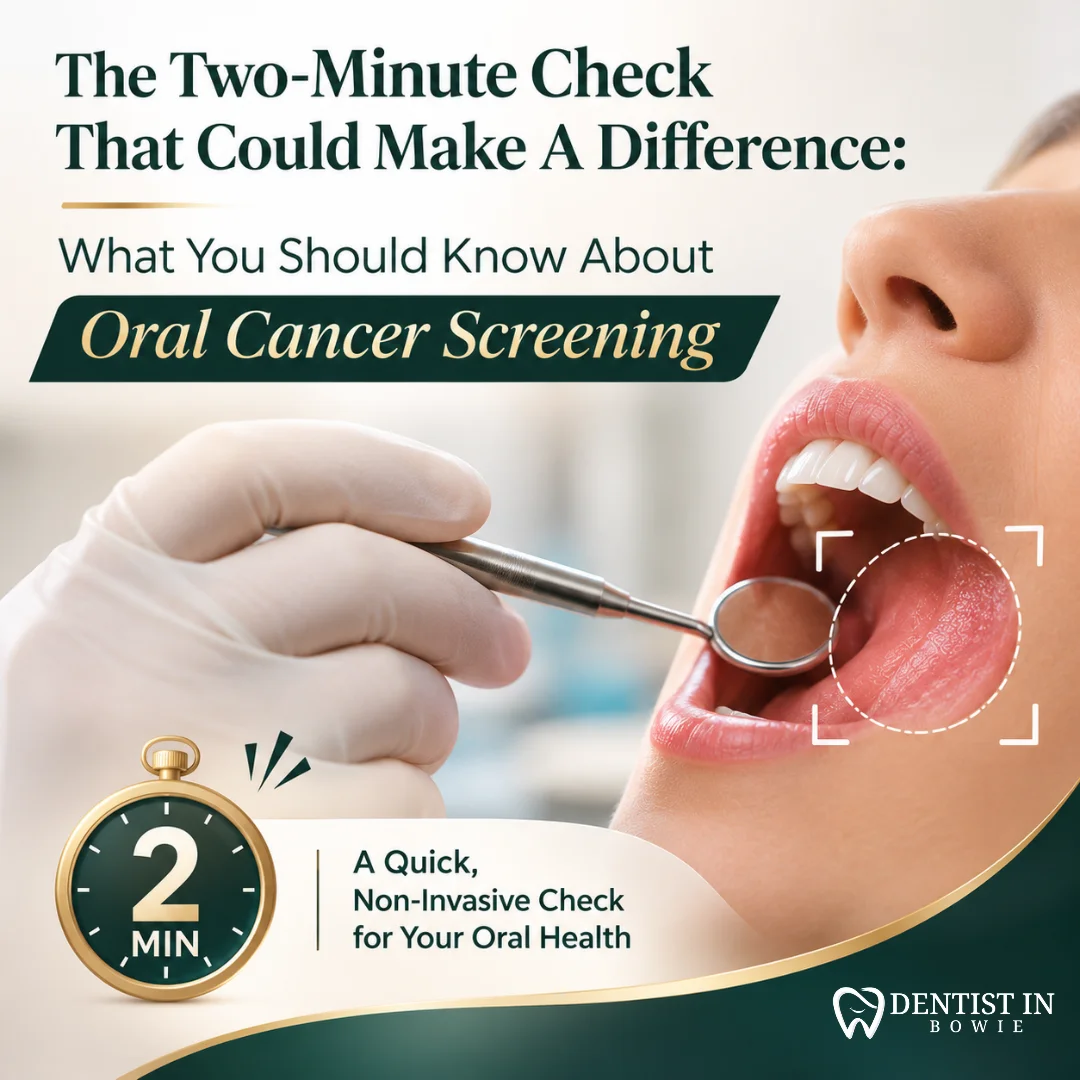
Many people worry about small mouth changes and do not know what to do. They skip checkups or wait until a problem grows. This leaves a risk that could have been caught early.
An oral cancer screening takes about one to two minutes and is noninvasive. Here you will know about what happens during a screen, clear warning signs to watch for, and a quick monthly self-exam anyone can do at home.
A quick oral cancer screening checks the face, lips, neck, nose interior, and the entire oral cavity for signs of trouble. The provider inspects soft tissues for sores, lumps, white or red patches, and areas of discoloration.
Patients remove dental appliances before the exam. The test also includes feeling the neck, jaw, and cheeks for lumps or swelling.
The procedure takes about one to two minutes and is noninvasive. Adults over 20 should get screened every three years. Adults over 40 should have a screening every year, and high-risk people need checks more often.
Early detection improves outcomes and raises the chance for a cure. Screening links prevention, detection, and oral health in a simple visit.
During a screening, the doctor looks closely at the mouth, lips, and throat for any unusual signs. They also feel the neck, jaw, and cheeks to check for lumps or areas that don't feel right.
The provider inspects the face, lips, neck, nose interior, and oral cavity. Patients must remove dental appliances first. They look at soft tissues for sores, lumps, or discoloration that patients may miss.
The exam is noninvasive and takes about 1 to 2 minutes. The quick screen supports oral health, detection, and prevention during a dental checkup.
White or red patches in the mouth count as warning signs. A sore that won’t heal also signals risk for cancer. Adults over 20 should have a screening every three years. Adults over 40 should get screened yearly.
High-risk individuals need more frequent checks. Early detection greatly improves diagnosis and the chance for a cure.
Clinicians press and feel the neck, jaw, and cheeks to find lumps, swollen nodes, or hard spots. Patients remove dental appliances before this part of the screening. The exam checks soft tissues that patients may not see, helping cancer detection and early diagnosis. A full screening takes about 1 to 2 minutes.
Adults over 20 should get this screening every 3 years, and adults over 40 should have it yearly. High-risk people need more frequent checks. This quick, noninvasive step supports oral health and improves chances for a cure through early detection. Screening and regular dental checkups boost awareness and preventive care.
Healthcare providers use diagnostic tools like fluorescence devices and dyes during oral cancer screenings. These tools help to highlight abnormal areas in the mouth that may not be visible through a standard visual inspection.
They can spot early signs of precancerous lesions or potential tumors. By shining a special light, these devices make certain tissues glow differently than healthy ones do.
Fluorescence imaging increases detection rates for oral health issues. It allows clinicians to examine soft tissues closely and identify problems sooner. This quick technique enhances the chances of early diagnosis, which is crucial as outcomes improve with timely intervention.
People should consider undergoing screenings every three years after age 20 or annually after age 40 for better prevention and risk management.
Watch for sores that won't heal, strange patches in your mouth, or trouble swallowing. These signs could signal a problem worth checking out.
Persistent sores or bleeding can be serious warning signs. A sore that won't heal often indicates a potential issue, including oral cancer. Patients should not ignore these symptoms. White or red patches in the mouth are also red flags for this type of cancer.
Frequent checks for changes in the mouth allow individuals to catch problems early. Adults over 20 need screenings every three years, while those over 40 should have them annually.
High-risk individuals may require more frequent visits to their healthcare providers. Regular monitoring plays a crucial role in prevention and detection of oral health issues, ensuring better outcomes down the line.
The next step involves learning how to perform a monthly self-exam at home for further awareness and proactive care.
Red or white patches in the mouth often signal potential oral cancer. These color changes are not something to ignore. The presence of these patches could point to a precursor for more serious issues.
Individuals should pay close attention if they notice persistent sores that won't heal, as this can also indicate a problem. Regular screenings help detect these warning signs early, which can lead to better outcomes and treatment options.
Adults over 20 should plan for an oral cancer screening every three years, while those over 40 need one annually. High-risk individuals may require even more frequent visits to their healthcare provider for overall oral health awareness and prevention efforts.
Difficulty swallowing or speaking can be serious warning signs of oral cancer. Patients may experience these issues along with persistent sores or bleeding in the mouth. Changes like red or white patches often accompany this difficulty, suggesting possible precancerous conditions.
A sore that won't heal also raises concern; it might indicate a more severe problem developing in the throat. Adults over 20 should undergo oral cancer screenings every three years, while those over 40 need them annually to catch any symptoms early on.
High-risk individuals must get screened more frequently than others do. These check-ups are quick and typically last one to two minutes; however, they play a crucial role in early diagnosis and prevention.
Timely detection greatly improves treatment outcomes and survival rates for patients facing oral health challenges.
Checking your mouth can be quick and simple. Start by examining your face, lips, and gums for any unusual changes. Next, gently feel your neck and jaw for lumps or swelling that shouldn’t be there.
Finally, take a look at your tongue and the roof of your mouth to spot anything odd. These small steps can make a big difference in early cancer detection.
Inspect the face, lips, and gums for changes regularly. Look for any unusual sores or bleeding that won’t heal. Red or white patches in the mouth can be signs of potential oral cancer.
Changes in color or texture may indicate problems too. Patients should remove dental appliances before starting this check.
A simple glance can reveal important information about oral health. This part of a self-exam takes just moments and could lead to early detection of serious issues like cancer. Health professionals urge adults over 20 to have screenings every three years, while those over 40 should go annually.
Early detection boosts treatment success rates significantly, making awareness essential for everyone’s well-being.
Touch the neck and jaw to feel for lumps or swelling. This simple step can help identify abnormalities early. A lump might not seem serious, but it can signal a potential issue. Swelling in these areas could indicate infection or cancer.
Oral cancer screenings examine soft tissues and look for signs like these that often go unnoticed.
Individuals should pay close attention during their self-exams at home each month. Adults over 40 are advised to have annual screenings with a professional, while those under 40 should seek screening every three years.
High-risk individuals may need more frequent checks based on their specific health factors. Early detection significantly improves outcomes for oral cancer treatment and increases chances of successful recovery.
Checking the tongue, mouth roof, and throat is an essential part of a self-exam. Individuals should look for any sores, lumps, or discoloration that could signal potential issues. These abnormalities can be hard to spot without close observation.
Red or white patches in the mouth are classic signs of possible oral cancer. A sore that fails to heal could also serve as a warning sign.
While performing this check, patients might notice changes they haven't seen before. Regular inspections help promote awareness about oral health and enable early detection of concerns like precancerous symptoms.
Adults over 20 should get screened every three years; those over 40 need annual screenings for peace of mind and better outcomes if cancer develops.
Oral cancer screening is a quick check that helps find signs of cancer in the mouth. It usually takes about two minutes and can make a big difference in early detection.
Getting screened can catch problems early, when treatment works best. It’s like finding a leak before it floods your house; prevention is key to better outcomes.
Most experts recommend getting screened at least once a year, especially if you smoke or drink alcohol regularly. Think of it as an annual health check-up for your mouth.
During the screening, a dentist will look inside your mouth for any unusual spots or changes. They may also ask questions about your health history to provide personalized care tailored to you.
Tell us a little about what you need — we'll be in touch shortly.
14999 Health Center Dr #110, Bowie, MD 20716, United States

Hi! I'm Tooth fairy! Your AI Assistant Ask me anything