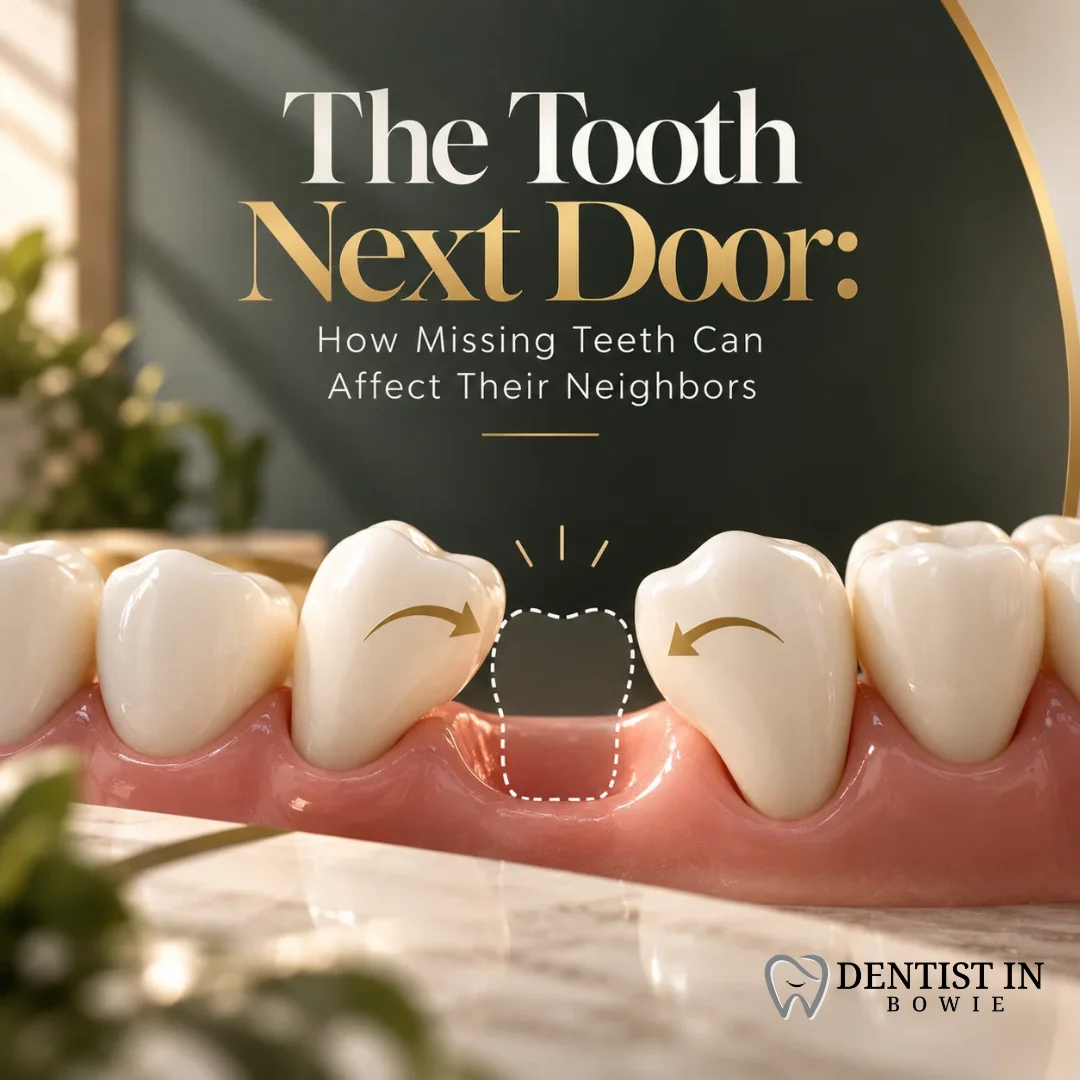
Missing a tooth can feel small at first. People may think it only looks bad. Yet the tooth next door does not sit still. Neighboring teeth begin to shift into the empty space almost right away. That shift can change the bite, make chewing painful, and speed up other dental problems.
Here you will know one clear fact: neighboring teeth begin to shift when a tooth is missing. You will also know how that shift leads to more wear, gum trouble, and bone loss.
Missing teeth can cause neighboring teeth to shift out of their proper places. They might lean or twist, creating misalignment that affects the entire bite.
Neighboring teeth begin to shift into the gap as soon as a tooth is lost, and a dentist in practice has seen this happen within months. Teeth immediately migrate, which disrupts dental alignment and changes the bite, creating uneven pressure on nearby teeth.
This pressure makes adjacent teeth more likely to become crooked, mobile, or even fracture, and it raises the risk of gum disease and tooth decay next door. Bone loss starts at the missing tooth site and leads to bone resorption that weakens support for surrounding teeth.
Failure to replace a lost tooth can set off a domino effect, causing more tooth loss and chewing discomfort down the line.
A missing tooth starts a chain reaction in the mouth. Teeth begin to shift, and tooth migration fills the gap. A dentist who treated dozens of cases saw nearby teeth move within weeks. The new alignment creates uneven pressure that causes increased wear and tear on certain teeth.
Patients report faster enamel loss and chewing discomfort after that shift. Teeth without opposing contact grow more mobile and risk fractures. Bone loss begins at the empty socket, which worsens the load on adjacent teeth.
These changes raise the chance of gum disease around neighboring teeth and can lead to more tooth loss.
Missing teeth can lead to serious oral health issues. They increase the risk of decay and gum disease for neighboring teeth, making them more vulnerable.
A gap lets neighboring teeth migrate into the open space. Neighboring teeth begin to shift and seek to fill the gap right away. Tooth migration creates uneven pressure and misalignment. That change raises the risk of tooth decay and gum disease in adjacent teeth.
Teeth that lose contact with an opposing arch become mobile and may fracture. Lack of contact also traps food and bacteria, which fuels gum disease and decay. Failing to replace a lost tooth can lead to more tooth loss, bone deterioration, and worse oral health.
Bone loss occurs where a tooth has gone missing. This loss can happen quickly and has serious consequences for dental health. Bone deterioration starts in the jaw right after tooth loss.
It weakens the structure and support of adjacent teeth. As bone resorption continues, neighboring teeth may begin to shift into the gap left behind.
When surrounding teeth move, they create new alignment issues. Misalignment increases stress on other teeth, making them more prone to fractures and mobility issues. Missing teeth also raise the risk of gum disease for those nearby as they lose proper contact with opposing molars.
Ignoring this problem can lead to further tooth loss and worsen oral health conditions down the line.
Dental bridges can fill the gap left by missing teeth. They connect nearby teeth and restore bite function and appearance.
Dental implants offer a permanent option for tooth replacement. These fixtures fuse with the jawbone, providing strength and stability that feel like natural teeth.
Dental bridges offer a strong solution for missing teeth. They fill gaps left by tooth loss, preventing neighboring teeth from shifting. Those neighboring teeth often begin to move right into the open space as soon as a tooth goes missing. This movement can throw off bite alignment and cause discomfort while chewing.
Bridges not only restore dental function but also help maintain jawbone health. Bone loss occurs at the site of the missing tooth, making it essential to replace lost teeth promptly.
Without proper support, other teeth may become crooked or misaligned over time. By choosing bridges, individuals can avoid these issues and keep their smiles looking great!
Dental implants offer a solid solution to replace missing teeth. These fixtures integrate into the jawbone, creating a strong foundation for artificial teeth. They can stop neighboring teeth from shifting and maintain proper bite alignment.
Skipping this option allows tooth migration, leading to misalignment and possibly crooked smiles.
Patients often share how implants improve their quality of life. Eating becomes more enjoyable again without the fear of discomfort or gaps in their smile. Research shows that replacing a missing tooth with an implant can prevent bone loss at the site, preserving both oral health and facial structure over time.
Missing teeth can impact neighbors in surprising ways. A gap-toothed smile might lead to social awkwardness, affecting how people interact. It could also influence overall community health; when one person has dental issues, it may encourage others to neglect their own dental care.
Seeing a neighbor with missing teeth can stir feelings of empathy or concern. People may worry about their neighbor’s self-esteem and quality of life. This situation often opens up conversations about health and well-being within the community.
Absolutely! Missing teeth can alter how people perceive each other, sometimes leading to stigma or judgment. On the flip side, it might create bonds among those who share similar experiences or challenges related to dental health.
If your neighbor has visible dental problems, approach them kindly and offer support without judgment. Sometimes just lending an ear helps more than you think; sharing resources for affordable dental care could make a real difference in their life too!
Tell us a little about what you need — we'll be in touch shortly.
14999 Health Center Dr #110, Bowie, MD 20716, United States
Hi! I'm Tooth fairy! Your AI Assistant Ask me anything