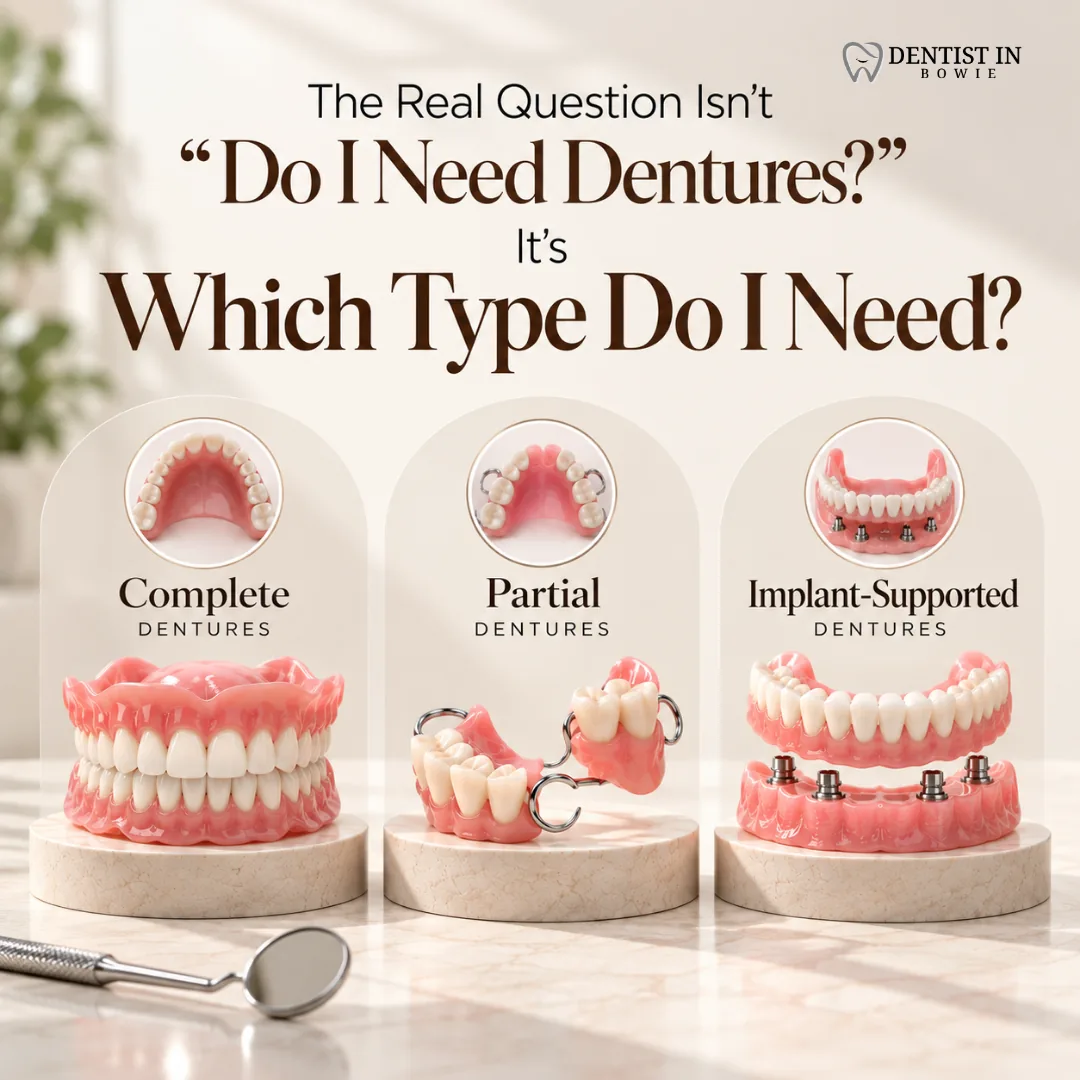
Many people lose teeth and do not know what to do next. They worry about chewing, smiling, and budget. Dentures can replace missing teeth and restore function.
A tooth is ready for replacement when it cannot be saved with a filling, crown, or root canal. Here you will know the main types of Dentures, when each works best, and what to expect for cost and care.
There are different types of dentures for tooth replacement and smile restoration. Each option supports dental health and daily comfort in its own way.
Complete dentures replace all teeth in either the upper or lower arch. Dentures act as removable prosthetics for full mouth restoration. The appliance restores bite function and supports facial structure. Patients regain chewing and speaking ability and improve oral health.
A dentist may recommend complete dentures when teeth cannot be saved with a filling, crown, or root canal. No minimum number of bad teeth exists to qualify for tooth replacement. Cost varies by type and complexity, and implant supported options can add stability but raise expenses.
Care and maintenance matter, including daily cleaning, proper storage, and nighttime handling, and the next section covers partial dentures.
Partial dentures serve as a helpful solution for individuals missing some teeth while retaining others. These removable devices fill gaps left by lost teeth. They consist of replacement teeth attached to a pink or gum-colored base, which blends with the natural gum line. Partial dentures restore aesthetics while supporting oral health and functionality.
Patients benefit from partial dentures through improved chewing and speaking abilities. These appliances help maintain facial structure, preventing sagging cheeks associated with tooth loss.
Caring for partial dentures involves regular cleaning and proper storage when not in use. Many patients find them comfortable once they adjust to wearing them regularly, boosting their overall confidence and quality of life.
Implant-supported dentures offer a stable solution for tooth replacement. These dentures attach to dental implants placed in the jawbone, providing more support than standard removable dentures.
Patients enjoy improved functionality and comfort because these implants integrate with bone tissue. Many people find that this option enhances their chewing and speaking abilities significantly.
Choosing implant-supported dentures can also boost confidence due to their secure fit and natural appearance. They help maintain facial structure by preventing bone loss, which often occurs after losing teeth.
For those considering different types of dentures, evaluating lifestyle and budget plays an important role in making the right choice.
Choosing the right type of denture requires careful thought. First, assess how many teeth you have lost and consider your daily routines to find a suitable option.
Tooth loss can vary greatly from person to person. Understanding the extent of lost teeth assists in selecting the right dentures.
Choosing the right type of denture boosts comfort and functionality. It enhances a person's appearance and builds confidence in social situations.
Dentures significantly improve functionality and comfort for individuals experiencing tooth loss. These removable oral appliances restore the ability to chew and speak properly, which enhances daily life.
Complete dentures replace all teeth in either the upper or lower arch of the mouth, providing full support. Partial dentures fill gaps when some healthy natural teeth remain, ensuring a more balanced bite.
Patients report enhanced confidence after getting dentures. Improved appearance contributes to this boost in self-esteem by supporting facial structure. Properly fitted dentures also increase comfort, making them easier to wear throughout the day.
Taking care of these dental solutions is crucial; maintenance ensures their longevity and optimal performance over time.
A bright smile boosts self-esteem. Many people feel more attractive with dentures. They can restore facial structure and enhance aesthetics. Patients often report increased confidence after getting their new teeth. Improved appearance allows them to engage in social situations without hesitation.
Dentures help individuals regain the ability to chew and speak clearly; these improvements contribute to a positive image. The right type of denture fits well, which aids in comfort too.
Following proper care and maintenance routines leads to long-lasting results in both function and looks.
You might need dentures if you have lost teeth due to decay, injury, or gum disease. Dentures can help restore your smile and improve chewing.
There are several types of dentures. Full dentures replace all teeth in the upper or lower jaw. Partial dentures fill gaps when some natural teeth remain.
Choosing the right type depends on your oral health and personal needs. A dentist can assess your situation and recommend the best option for you.
Yes, caring for dentures is important for their longevity. Clean them daily with a soft brush and store them in water when not in use to prevent damage.
Tell us a little about what you need — we'll be in touch shortly.
14999 Health Center Dr #110, Bowie, MD 20716, United States
Hi! I'm Tooth fairy! Your AI Assistant Ask me anything