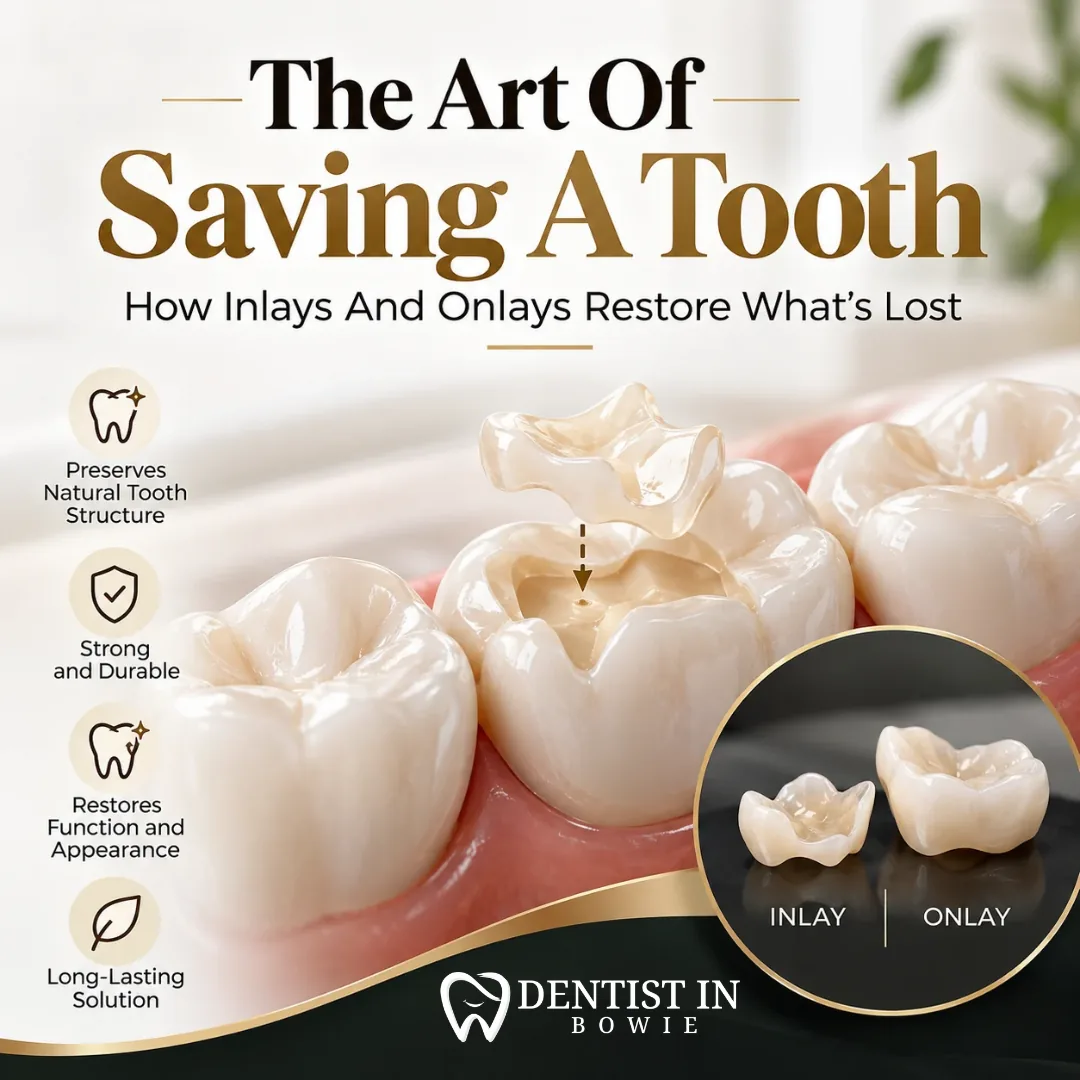
Many people feel a tooth is lost to a big cavity or a failing filling. They want a fix that saves as many teeth as possible. Inlay-onlay-restorations offer that path. They act like a strong patch for a damaged tooth.
One fact matters most. Inlays and onlays are made outside the mouth, then cemented in place, so they fit well and last longer than regular fillings.
Inlays and onlays are dental restorations that help repair damaged teeth. They fit inside or cover the top surface of a tooth, offering support and structure.
An inlay sits inside the chewing surface of a tooth. A dentist calls it an indirect filling made in a lab. It preserves dental tissue and treats tooth decay without shaving away too much tooth structure. The piece comes custommade to match color and shape.
The process of placing inlays and onlays starts with a dentist examining the damaged tooth. They then prepare it by cleaning out any decay and shaping it for the custom fit.
Inlays and onlays save tooth structure. They work as indirect fillings to restore dental tissue.
Inlays and onlays offer impressive durability, making them great for restoring damaged teeth. They can enhance a tooth's structure while preserving its natural look. Many people appreciate how these restorations blend seamlessly with their smiles.
Moreover, they stand strong against daily wear and tear. Curious about more benefits? Read further to discover the magic of inlays and onlays!
Inlays and onlays provide exceptional durability. These restorations often use strong materials like porcelain or gold. Such choices allow them to withstand daily wear and tear better than traditional fillings.
Stronger solutions mean less chance of breakage over time. Many patients appreciate this long-lasting approach to dental care.
Along with strength, these treatments offer incredible resistance to tooth decay as they seal gaps effectively. This helps maintain oral health by preventing bacteria from sneaking in unnoticed.
A first-hand experience shows that a patient felt relieved after receiving an onlay since it restored the tooth while keeping its natural structure intact. The combination of strength and longevity makes inlays and onlays a smart choice for those seeking effective restoration options.
Inlays and onlays offer a striking aesthetic advantage for dental restoration. They blend seamlessly with natural tooth structure. Dental professionals create these custom-made pieces using materials like porcelain or composite resin, allowing them to match the unique color of each patient’s teeth.
Patients often appreciate how inlays and onlays maintain their smile's beauty while providing strong support. Unlike traditional fillings, which can be noticeable, these restorations deliver a polished look that enhances overall oral health.
With careful attention to detail in design, they truly restore both function and form without sacrificing style.
If you have tooth decay or damage, these treatments might just save the day. They help preserve more of your natural tooth structure compared to crowns. If aesthetics matter to you, custom-made inlays and onlays can look like real teeth.
Dentists recommend inlays and onlays for specific cases of tooth damage or decay. They work well when cavities are too large for fillings but not severe enough to require crowns. These restorations serve as indirect fillings that preserve more of the original tooth structure.
Patients often benefit from this conservative treatment option due to its aesthetic appeal and durability. Inlays and onlays can restore teeth affected by wear or fracture, keeping smiles intact without needing aggressive procedures. This approach helps maintain overall oral health while providing a natural look.
Inlays and onlays are dental restorations used to repair damaged teeth. They fit into or over the tooth, restoring its shape and function.
These treatments fill cavities that traditional fillings cannot handle. They provide strong support, protecting the tooth from further damage while preserving as much of the natural structure as possible.
Most patients experience little discomfort during the procedure. Dentists use local anesthesia to numb the area, making it similar to getting a filling.
With proper care, these restorations can last many years, often up to 10-15 years or more! Regular dental check-ups will help keep them in good shape longer.
Tell us a little about what you need — we'll be in touch shortly.
14999 Health Center Dr #110, Bowie, MD 20716, United States
Hi! I'm Tooth fairy! Your AI Assistant Ask me anything