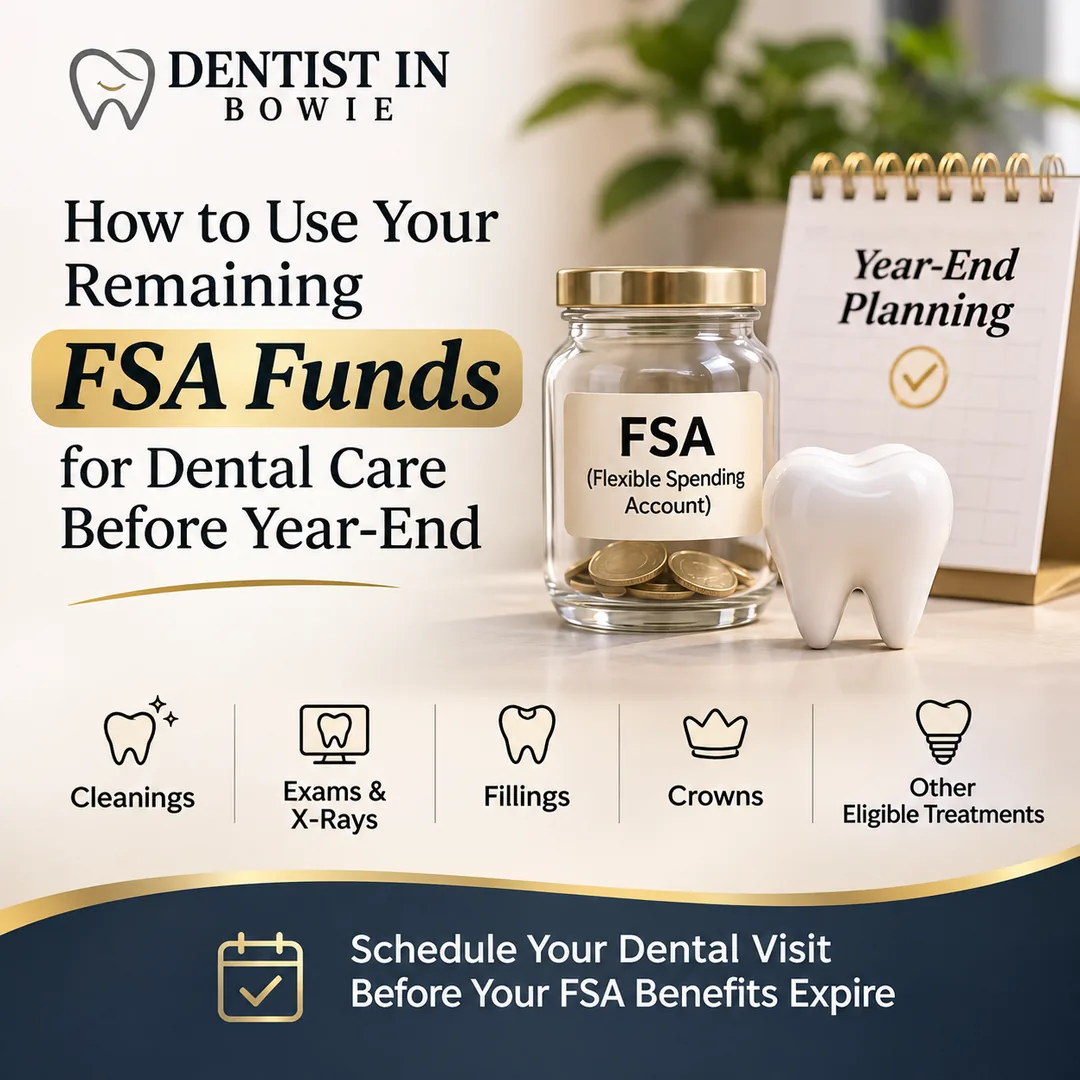
Many patients reach year-end with FSA money left and dental care they have put off. They may wonder which dental benefits qualify or if a cleaning can help remove dental plaque.
Most FSAs follow a “use it or lose it” rule, though some plans allow a rollover or grace period. FSA funds are separate from individual dental insurance, and plan rules decide which costs qualify. This guide explains eligible care and how patients can use their balance before the deadline. There is still time.
As patients review year-end options, they can first check which dental expenses qualify for FSA payment. IRS guidelines allow FSA reimbursement for dental procedures. Patients can generally use these funds for most dental expenses, including routine care.
Not every procedure or treatment qualifies. Patients should confirm an expense with their dentist or FSA plan before scheduling care.
FSA funds can help cover various dental care expenses. From routine check-ups to more involved procedures, it's worth knowing what you can pay for with your pre-tax dollars.
Routine cleanings, dental exams, and X-rays are common ways patients use remaining FSA dollars before year-end. IRS guidelines allow dental procedures for FSA reimbursement, but not every service qualifies. Patients can check with their plan before scheduling a visit. A dentist can also help patients plan needed restorative care, such as fillings.
Patients can use FSA funds for needed dental work, such as fillings, crowns, and root canals. IRS guidelines allow dental procedures for FSA reimbursement, but not every treatment qualifies.
A patient planning a filling or other procedure can ask the dentist to confirm eligibility before scheduling care. This helps the patient decide how to use the remaining FSA balance.
Orthodontic treatments like braces and retainers qualify for FSA reimbursement. These devices help correct misaligned teeth and jaws. Patients can use their remaining funds to cover these essential services before the year ends. Most dental plans recognize orthodontic work as eligible expenses.
Considering treatment early helps avoid rushing at the last minute. Some plans may allow a portion of unused FSA funds to roll over into next year, but many require spending by year-end.
Taking advantage of available resources ensures patients make good use of their pre-tax money on important dental care.
Patients can purchase oral health products like mouth-guards and night guards using FSA funds. These products offer protection for teeth during activities like sports or while sleeping. They help prevent damage from grinding and clenching, which many people experience at night.
Using FSA money for these items makes sense as they contribute to overall dental care. Placing an order before year-end helps ensure patients utilize their remaining balance wisely. Next, exploring tips for effectively using those FSA funds becomes essential to maximize benefits before the deadline.
Plan dental visits right away. Delaying could mean missing out on valuable benefits. Confirm with your dentist which expenses qualify for FSA reimbursement before your appointments. A simple chat can save you time and effort later on.
Scheduling appointments early can help patients maximize their FSA funds. It reduces the risk of losing any remaining balance before year-end.
This approach allows for a smoother transition into confirming eligible expenses with your dentist next.
Patients should always check which expenses their FSA covers. This step saves them time and money in the long run.
Taking these steps leads to smooth sailing when it comes time to use those funds before year-end!
You can often use FSA funds for eligible dental care, such as exams, cleanings, fillings, crowns, and braces. Check your plan rules before booking treatment.
Usually, yes. Your dental care must meet your plan’s rules and timing requirements. Ask your dentist to schedule treatment before the plan year ends.
Some plans offer a carryover or grace period, while others may require you to use the funds by year-end. Check with your FSA administrator. Unused money may not roll over.
Pay with your FSA card or submit a claim with your receipt. Check your plan’s claim deadline, too. A last-minute dental visit won’t help if you miss the filing window.
Tell us a little about what you need — we'll be in touch shortly.
14999 Health Center Dr #110, Bowie, MD 20716, United States
Hi! I'm Tooth fairy! Your AI Assistant Ask me anything