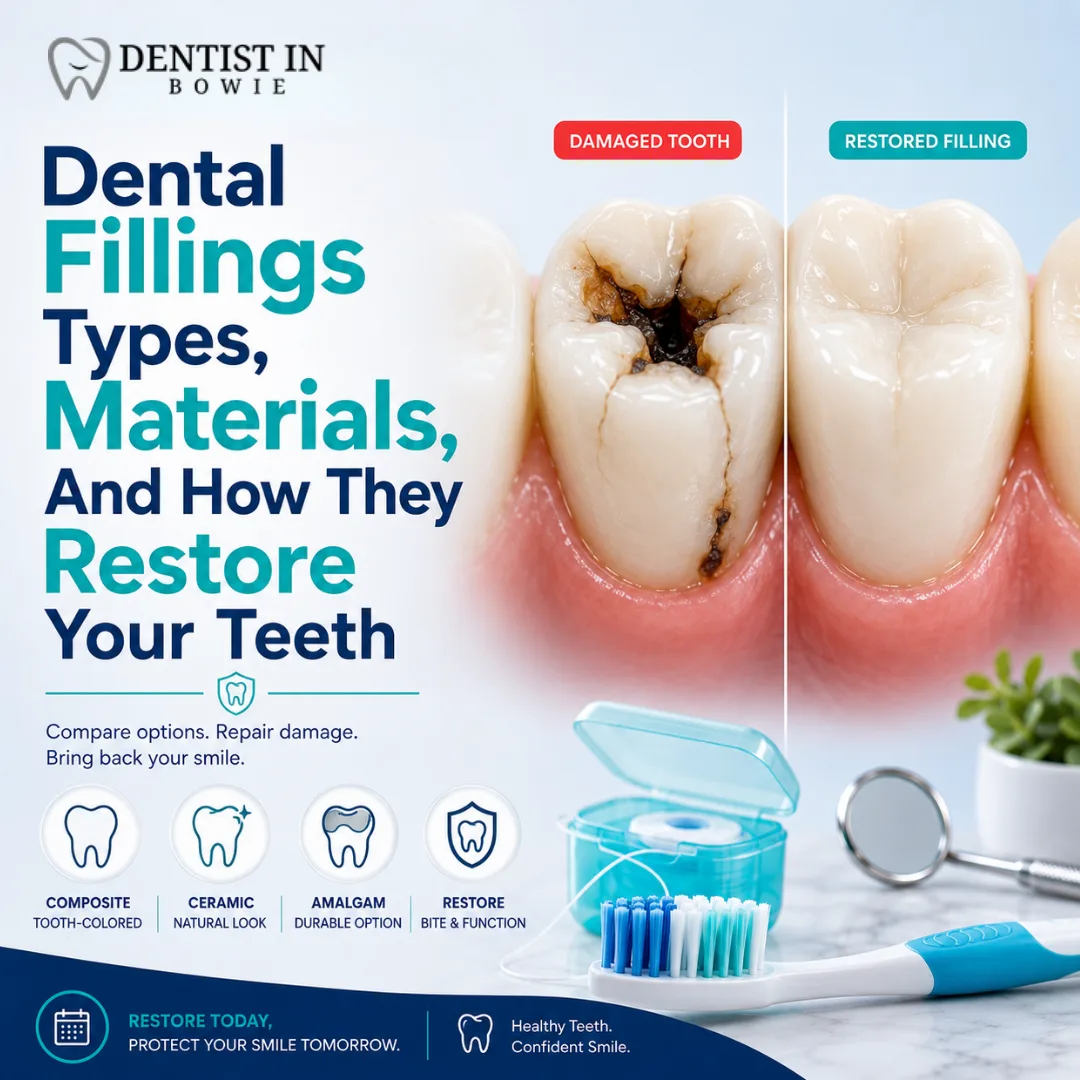
Many people feel tooth pain or see dark spots and worry about cavities. They want to stop decay and keep their smile healthy. Dental Fillings can repair holes and protect the tooth.
One clear fact is that different filling types fit different needs, such as color match or strength. Here you will learn about common types, how the procedure works, and what to expect for cost and care. It will help you pick the right option and prepare for treatment.
Dentists use different filling types to fix cavities and restore teeth. Each type offers unique benefits for oral health and appearance.
Composite fillings match tooth color and blend with the smile. These materials bond to tooth enamel and dentin for strong restoration. The dentist removes decay, places layers, and hardens each layer with a light. They offer a less noticeable option for cavity treatment in front teeth.
Patients often choose composite for its good aesthetics and biocompatibility. Resin bonds can seal margins and reduce future decay risk. Color matching allows natural results for small and medium cavities. Out-of-pocket costs vary by clinic and tooth location, but many find the price reasonable. Routine care with brushing and flossing keeps the filling durable.
Transitioning from composite resin fillings, amalgam fillings offer a different approach to cavity treatment. These fillings contain a blend of metals, including silver, mercury, tin, and copper. Dentists often choose them for their strength and durability. Many people trust amalgam fillings in the back teeth where pressure from chewing is greatest.
Amalgam stands out due to its affordability and long-lasting qualities. They resist wear well and can last over ten years with proper care. Some may worry about mercury's presence in these materials; however, studies show that they are safe for most patients. Dental professionals consider amalgam fillings an effective choice for treating dental caries while maintaining oral health.
Glass ionomer fillings use a mixture of glass and acrylic. Dentists often choose these fillings for their unique advantages. They easily bond to tooth structure and release fluoride, which helps prevent further decay. This makes them valuable for restoring teeth in children or those with high cavity risk.
These materials provide good aesthetics while ensuring durability. The filling procedure is straightforward and quick, allowing for efficient treatment. Cost-wise, glass ionomer fillings are usually more affordable than some other options like composite resin fillings or dental crowns. Their biocompatibility makes them safe for oral health, contributing positively to dental hygiene.
Dental fillings play a crucial role in restoring teeth damaged by cavities and tooth decay. They help maintain oral health while improving the aesthetics of smiles.
There are several types of dental fillings, including composite resin, amalgam, gold, and ceramic. Each type has unique properties and uses based on the patient's needs.
Dental fillings can be made from various materials like composite resin for a natural look, amalgam for strength and durability, gold for longevity, and ceramic for aesthetic appeal.
Dental fillings help restore teeth by filling cavities caused by decay or damage. They protect the tooth from further harm while restoring its shape and function.
You should consider getting a filling if you have a cavity or damaged tooth. Fillings prevent pain and infection while allowing you to maintain good oral health and function.
Tell us a little about what you need — we'll be in touch shortly.
14999 Health Center Dr #110, Bowie, MD 20716, United States

Hi! I'm Tooth fairy! Your AI Assistant Ask me anything