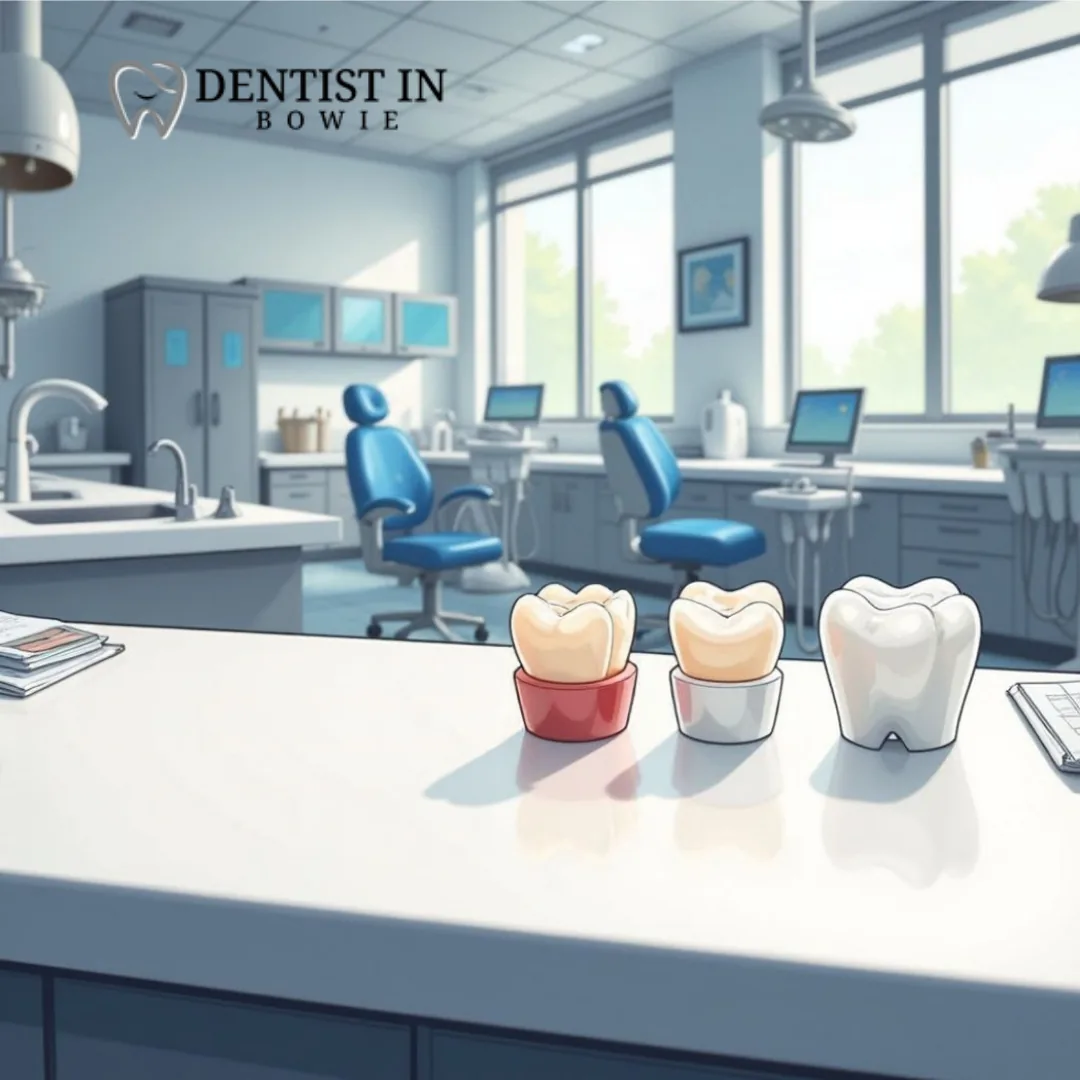
Types of Dental Crowns
Metal crowns offer high strength and long durability. Dentists use them for molars that endure strong bite force. Porcelain-fused-to-metal crowns blend strength and aesthetics. They match tooth color and attach well to a dental implant or a natural tooth.
All-ceramic and all-porcelain crowns give the best aesthetics. Prosthodontics often recommends them for front teeth and cosmetic dentistry cases.
Gold and metal alloys resist wear and last many years. Zirconia crowns provide durability and a natural look. Temporary crowns protect the prepared tooth during the crown placement procedure.
Dental crowns also cap teeth damaged by tooth decay, support a dental bridge, and complete a dental restoration after root canal therapy. Dentists discuss materials, durability, cost, and bite function with patients before the dental procedure.
After reviewing crown types, the dentist outlines the dental crown procedure. The dentist numbs the area with local anesthesia. They remove decay and shape the tooth for dental restoration. The clinician takes an impression or uses a digital scan for the lab. A temporary cap protects the tooth while the permanent crown is made.
Labs make the permanent crown from porcelain, ceramic, or metal fused to porcelain. The patient returns for crown placement and final cementation. The restoration restores bite function, strengthens the tooth, and improves aesthetics.
If the tooth lacks support, the dentist may recommend a dental implant or a post and core. Providers give clear aftercare instructions for post-operative care and long term durability.
Dental crowns offer several benefits for patients seeking dental restoration. They strengthen weak teeth and repair damage caused by tooth decay or injury. Crowns improve aesthetics, making smiles more attractive.
Many types of materials are available, including porcelain, metal, and resin; each offers unique durability and strength. Dental crowns help restore bite function and enhance oral health by protecting remaining tooth structure.
Despite their advantages, potential risks exist with dental crowns. Some individuals may experience sensitivity to hot or cold temperatures after placement. There’s also a chance that the crown could loosen over time or even fall out if not properly maintained. Patients should follow proper aftercare to ensure longevity which includes good oral hygiene practices like brushing and flossing regularly.
Aftercare plays a crucial role in maintaining dental crowns. Patients should maintain good oral health through regular brushing and flossing. Using a soft-bristled toothbrush helps protect both the crown and surrounding teeth.
Regular dental check-ups are essential to ensure that the crown remains intact and functions properly. Longevity often depends on various factors, including material choice and personal habits. Crowns made from durable materials like porcelain or metal can last many years with proper care.
Avoiding hard foods also minimizes wear and potential damage to the crowns. Maintaining routine cleanings allows for early detection of issues, supporting long-lasting dental restorations.
Dental crowns are caps that cover damaged teeth. They aid tooth repair and dental restoration. They restore bite function and support oral health.
Dentists make crowns from different materials. They use crowns on natural teeth and with dental implants. Prosthodontics and cosmetic dentistry help pick the best type. Aesthetic dentistry aims to improve looks and overall aesthetics. Dental restorations differ in durability and strengthening.
The dental procedure starts with an exam and X-rays. The dentist trims the tooth or places a dental implant if needed. They make a tooth cap and do crown placement. Prosthodontics often handles complex cases.
Crowns help tooth repair and stop tooth decay. They add durability and help with strengthening weak teeth. They improve bite function and boost aesthetics. Crowns support long term dental restoration and oral health.
Follow clear aftercare steps, and brush and floss every day. Visit your dentist for checks to prevent tooth decay. Dental implants need special care too. Good aftercare keeps dental crowns and dental implants strong.
Tell us a little about what you need — we'll be in touch shortly.
14999 Health Center Dr #110, Bowie, MD 20716, United States
Hi! I'm Tooth fairy! Your AI Assistant Ask me anything